Big Hero 6 – An Engineering Story with Adventure


While on an engineering trip to Maui (yes! Hawaii on business, but that’s another story), I took an evening after work to see Disney’s Big Hero 6 in Kahalui. I was impressed. Instead of telling you all about it, I found this nice blog by Kirk Englehardt. Please enjoy the science, the problem solving, the fun, the adventure, and the engineering.

https://www.linkedin.com/pulse/article/20141124182227-3091133-geeks-robots-and-drooling-stem-educators

Posted in Engineering | Tagged , | 1 Comment

Why do Galaxies glow in the center, except for the Milky Way


Why do galaxies glow in the center, except for the Milky Way, our galaxy? With a quick internet search, my curiosity was satisfied. Dust! Dust in our own galaxy blocks our view of the dense collection of stars near it’s center, while the bright center of other galaxies is visible since we generally are not looking through or in line with the galactic disc. Enjoy this nice Cal Tech website. I love learning about the heavens, God’s front yard, back yard, neighborhood… His domain is beautiful. Little by little, we are learning.
http://coolcosmos.ipac.caltech.edu/page/galactic_center

Posted in Engineering | Tagged | Leave a comment

Meet a Mechanical Engineer and see what he does


View this excellent short video and feel the enthusiasm this engineer has for his work at JPL. Hear his responses to the questions you probably have about engineering.

http://www.virtualjobshadow.com/CareerProfileDemo/?cguid={87F41A60-DE5A-4C24-B102-15AF1660FC86}

Posted in Engineering | Tagged , , , | Leave a comment

Renewable Energy Storage Using Gravity – Take a Look


An energy fluctuation problem, and a potential solution. Creative minds and smart engineers at work. Watch this video.

http://vimeo.com/75895781

Posted in Engineering | Tagged , , , | 2 Comments

Spreading Spectrum Modulation and Peanut Butter – Part 2


(Continued from Part 1)

“I can’t open my jar of peanut butter,” he exclaimed from the corner of his mouth with an overturned jar in his lap. “You’re a mechanical engineer; let’s design a mechanism for my wheel chair that will grip the bottle while I unscrew the lid?” Such needs launched my mind into new and page-turning design activities; as usual. (I love it when this happens. No, I mean, not when people have strokes, or can’t eat their peanut butter, but you know the english proverb, “Necessity is the mother of invention?” I’m surprised he didn’t suggest a capacitive or inductive solution.)

I watched him try to open jars and spread peanut butter. I sketched some ideas, I walked up and down isles at the hardware store for inspiration, then I purchased some aluminum bars, springs, thick rubber coating dip, and a polypropylene bread board and went home to my garage. I drilled mounting holes and a smooth gripping-slot in the cutting board, made wheel chair mounting brackets, bent the aluminum into a round jar-gripper in my vise-clamp, dipped the hand lever in liquid rubber, then mounted everything to the board, and headed back for a test drive on the wheel chair. We tried it, changed it, collaborated on it, revised it, and… Such challenges accelerate and often consume my mental capacities. Just like my father-in-law, I love these creative mental gymnastics. In good taste (or full disclosure), I can’t say that this invention was a gripping success, (I probably should have meditated on a park bench in a national park before going to the hardware store); we eventually set it aside and went on to other things. But I can say that it was gratifying to collaborate with and serve a great scientist who loved engineering, who served humanity, and who persisted spreading his spectrum-modulation, and… his peanut butter. Such are the minds of engineers.

(The End)

(If you really must know what ‘frequency-hopping spread-spectrum-modulation’ is, just ask Ferril Losee [1], or look it up on the internet.)

References:
[1] Losee, Ferril, RF Systems, Components, and Circuits Handbook, 1997 Artech House, Inc
[2] Morrill, Jenn, Ferril A. Losee, A Man of Honor, Edited by Jenn Morrill
Posted in Engineering | Tagged , , , | 1 Comment

Spreading Spectrum Modulation and Peanut Butter – Part 1


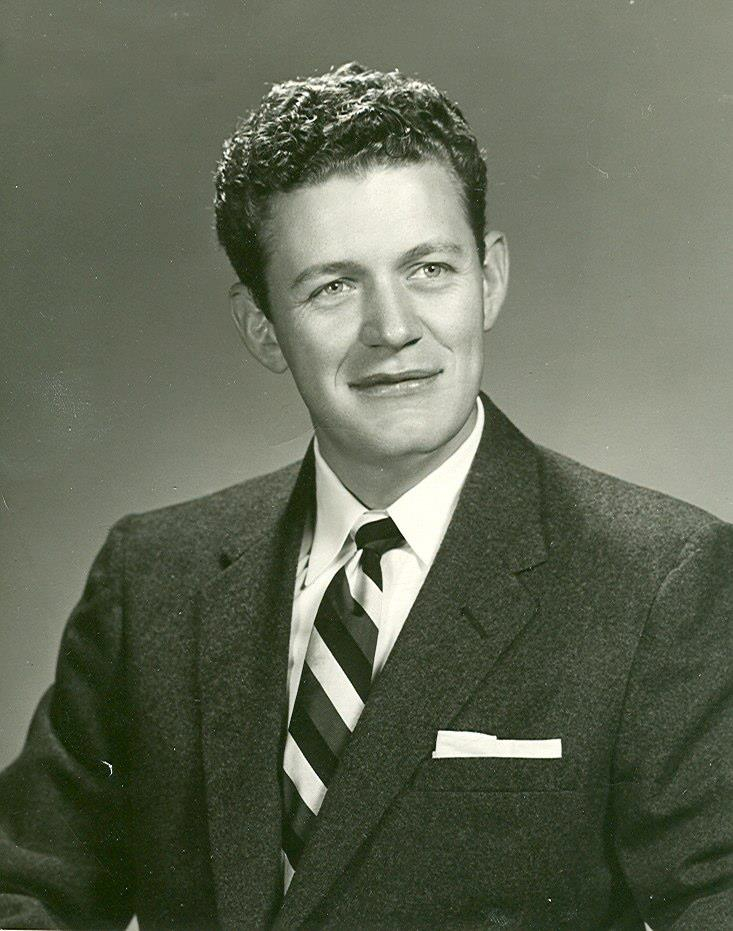
LoseeFerrilMy father-in-law was a distinguished genius (in my opinion), curly hair like Einstein but dark, no mustache, full lips and a pleasant expression. As an electrical engineer and communications expert, he knew wavelengths, propagation theories, radar, amplifiers, oscillators, modulators, waveguides, and…well, you get the idea. No kidding! He could transform a farmers field into a multi-acre antenna, the ionosphere into a mega radio signal reflector, a helicopter into a low-flying top secret,… oops, he never spoke much about those things. Whether on vacation at Zion National Park or the LaBrea Tar Pits, he enjoyed, absorbed, assimilated, and took nature in, while pensive on a bench gazing through time and space.

What does this have to do with peanut butter you ask? I’m getting there. Ferril Losee died in 2012, but I can almost hear him speak, “the velocity of the electromagnetic wave is inversely proportional to the square root of the dielectric constant of the medium,” [1] or on another occasion, “We solved the problem with frequency-hopping spread-spectrum-modulation, and pseudo random code, plus matched-filter integration.” [2] (Don’t feel bad, I’m not sure what these are either. What ever spectrum modulation is, he was an expert at spreading it.) As a professor, he lectured ‘ohms law’ like he was the german physicist Georg Simon Ohms himself, with depth of focus and application, remembering his pupils only when he turned around from the exhaustive chalk board every 15 minutes (I would know; I was there). As an engineer, he was spread thin taking sabbaticals regularly to leverage his expertise. And did I mention? He loved peanut butter. Okay, more about his career another time.

In his later years, he had multiple heart attacks and a stroke that disabled the left side of his body. For years he single-handedly (literally) wrote his memoirs, performed genealogical research, wrote a text book  on spectrum-modulation (and other topics) [2], served his family, and continued to see through time and space. He continued as my mentor. “I can’t open my jar of peanut butter,” he exclaimed from the corner of his mouth with an overturned jar in his lap. “You’re a mechanical engineer; let’s design a mechanism for my wheel chair that will grip the bottle while I unscrew the lid?”

(To be completed; tomorrow)

References:
[1] Losee, Ferril, RF Systems, Components, and Circuits Handbook, 1997 Artech House, Inc
[2] Morrill, Jenn, Ferril A. Losee, A Man of Honor, Edited by Jenn Morrill
Posted in Engineering | Tagged , , , , , , | 2 Comments

I don’t need to write– I’m an engineer!


I have worked with engineers for 30 years. I have worked with students for 12 years. Many engineers and students hesitate or back away from writing challenges, opportunities or assignments. There are a few who like to write, and a few who like to write well. My engineering opportunities have increased because of my willingness to write. How about you? Do you write as an engineer? Do you write as a hobby? Are engineers better because they write? Should the college curriculum include more writing? Is it correct for someone to say, “I don’t need to learn to write– I’m an engineer!”

In the  book I am reading, Mr. Goldberg and Mr. Somerville state, “This single-minded focus in engineering is in part due to the emphasis on depth in engineering education. There’s a sense that because there’s so much technical stuff to learn, we can’t afford to spend time developing students’ other intelligences.” (David E. Goldberg and Mark Somerville, A Whole New Engineer, The Coming Revolution in Engineering Education, ThreeJoy Associates, Inc. Douglas, Michigan, 2014)

Posted in Engineering | Tagged , , | 12 Comments

Engineering is about serving People


“Engineers solve problems in complex real-world situations; they design new systems and strategies to adapt to changing times; they make structures and products more user-friendly, responding to the real needs of communities and people. At its heart, engineering is about serving people.” (David E. Goldberg and Mark Somerville, A Whole New Engineer, The Coming Revolution in Engineering Education, ThreeJoy Associates, Inc. Douglas, Michigan, 2014)

Posted in Engineering | Tagged , | 1 Comment

Engineering is more than Math and Science


I am reading a new book on Engineering Education called, A Whole New Engineer. My years of professional experience give me cause to agree with many of their conclusions and propositions. I will post occasionally from this book. Speaking of current engineering education practices, authors David E. Goldberg and Mark Somerville state, “Once students are studying engineering, there is a heavy emphasis on development of logical and mathematical capacities, to the exclusion of the other intelligences. Too often this is reflected in students’ attitudes: ‘I don’t need to learn to write–I’m an engineer!’ This single-minded focus in engineering is in part due to the emphasis on depth in engineering education. There’s a sense that because there’s so much technical stuff to learn, we can’t afford to spend time developing students’ other intelligences.” (David E. Goldberg and Mark Somerville, A Whole New Engineer, The Coming Revolution in Engineering Education, ThreeJoy Associates, Inc. Douglas, Michigan, 2014)

I have personally found that, being willing to write, proactively learning to write, and striving to write well, have opened doors of engineering opportunity that I would not have otherwise had, if not for a pursuit of improved writing skills. Math and science are important, even expected, but communication skills brings power to an engineers ability to move projects and ideas forward.

Posted in Engineering | Tagged , , , | 1 Comment

7 Missing Basics of Engineering


In my 12th year of coaching college engineering students, I concur with David Goldberg in his assertion that engineering students are missing eight skills critical to being a complete, effective, and whole engineer. View his talk at TEDxUIUC, “7 Missing Basics of Engineering.” My Engineering Stories are an attempt to encourage engineering students to practice many of these skills.

https://www.youtube.com/watch?v=Rp9PfqUQ8a4

Posted in Engineering | Tagged , , , , , , , , | Leave a comment